 |
THE MUSICAL LIBRARIAN | PICTURE BOOK REVIEW The Proudest BlueA celebration of hijab, sisterhood, cultural identity, and the courage to be yourself. Highly Recommended | Grades 1–5 |
| BEST FIT Grades 1–5 |
BEST USE Read-Aloud |
THEMES Faith + Family |
Best for: Muslim representation, cultural identity, hijab, family relationships, belonging, responding to bullying, figurative language, and visual literacy.
When I first read The Proudest Blue: A Story of Hijab and Family, I immediately recognized its potential to spark meaningful classroom conversations. Written by Olympic medalist Ibtihaj Muhammad with S. K. Ali and illustrated by Hatem Aly, this picture book celebrates identity, faith, sisterhood, and the importance of being proud of who you are.
At the centre of the story are two sisters, Faizah and Asiya, beginning a new school year. For Asiya, it’s also her first day wearing hijab. Her beautiful blue hijab is a source of excitement and pride, but when other children make hurtful comments, Faizah must learn how to respond to their cruelty without losing sight of what makes her sister so special.
What I appreciate about this book is that it doesn’t present hijab as something strange or something that requires defending. Instead, it shows how meaningful it is to Asiya and her family, using beautiful imagery and a younger sister’s admiration to celebrate that choice.
I would absolutely recommend The Proudest Blue for Grades 1–5, particularly as a read-aloud connected to identity, family relationships, kindness, religious inclusion, and the power of words.
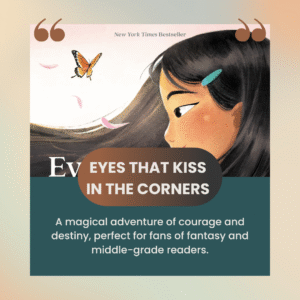
For a related picture book exploring Asian identity and family connections, I also recommend Eyes That Kiss in the Corners by Joanna Ho. Both books celebrate how children understand themselves through their families, while offering different and culturally specific perspectives.
What Is The Proudest Blue About?
Faizah is excited for the first day of school. She has new school supplies, light-up shoes, and something even more special to celebrate: her older sister Asiya is wearing hijab for the first time.
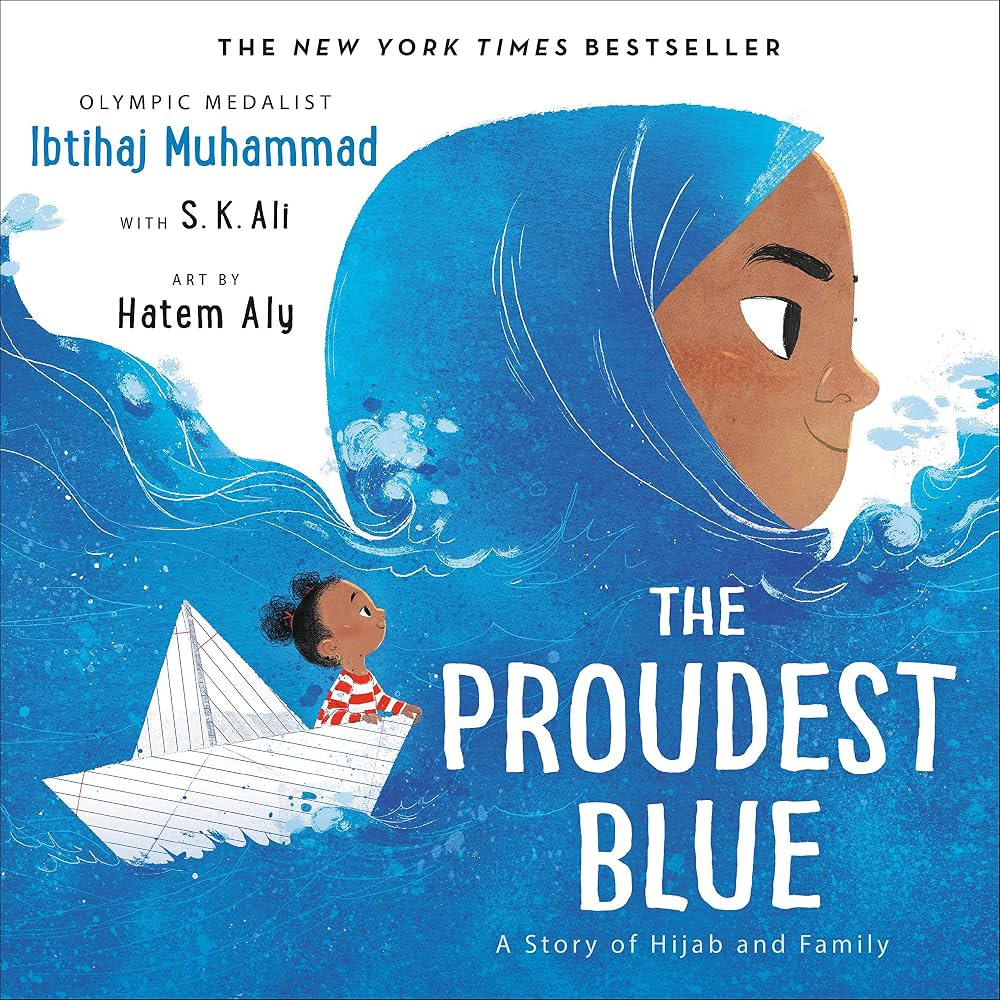
Asiya has chosen a beautiful blue hijab, and Faizah sees it as something extraordinary. Through her eyes, the fabric becomes connected to the ocean, the sky, and other beautiful images that communicate her love and admiration.
Unfortunately, not everyone at school shares Faizah’s excitement. Some children make unkind comments about Asiya’s hijab, leaving Faizah hurt and confused. She struggles to understand why anyone would make fun of something that means so much to her sister.
Throughout the day, Faizah remembers her mother’s words about strength and being proud of who you are. She also observes how Asiya carries herself with confidence, supported by the love of her family and the kindness of people around her.
The story becomes a celebration of the bond between sisters and the importance of refusing to let other people’s prejudice define your identity.
A Beautiful Celebration of Muslim Identity
One of the strongest reasons to include The Proudest Blue in an elementary classroom is its positive representation of Muslim identity and hijab.
In the story, wearing hijab is an important and meaningful moment for Asiya. Faizah’s excitement helps readers understand that the hijab isn’t presented as a problem or obstacle. It’s a source of beauty, belonging, and pride.
For Muslim students who wear hijab or have family members who do, this can offer an affirming opportunity to see a familiar experience represented positively. For students who are less familiar with hijab, the book provides a gentle introduction through the perspective of a family celebrating an important milestone.
I think teachers should be careful not to treat the book as though it explains the experiences of every Muslim girl or woman. Muslim communities are diverse, and individuals make different choices about religious expression. The story offers one family’s perspective, which is valuable without being universal.
For older students who are ready for a more complex exploration of Muslim identity and religious accommodation, I would pair it with Sadia by Colleen Nelson. That Canadian young adult novel examines how a basketball player responds when a sports rule creates a barrier to participating while wearing her hijab.
Sisterhood, Family, and Belonging
Although hijab is central to the story, the relationship between Faizah and Asiya is what makes the book especially touching. Faizah admires her sister and wants to understand how to respond when others treat her unkindly.
I love the way their mother’s guidance becomes an important source of strength. Rather than simply telling Faizah to ignore the hurtful comments, the story helps her understand that other people’s words don’t determine her sister’s worth.
This could lead to meaningful conversations about the people who help us feel confident and supported. Students might consider how family members, friends, teachers, and other trusted adults help us when we’re facing something difficult.
I wouldn’t assume every student has siblings or the same family structure. Instead, I’d invite students to think about the people who help them feel valued, without requiring anyone to share private family experiences.
Bullying, Prejudice, and the Responsibility to Speak Up
One of the important classroom discussions in The Proudest Blue involves the hurtful comments directed at Asiya. Although the story is gentle enough for young readers, it doesn’t avoid showing how painful discrimination can be.
Students can examine why the comments are harmful and how they affect Faizah and Asiya differently. Faizah is upset and confused, while Asiya draws strength from her own confidence, her family, and those who support her.
I’d be careful not to turn this into a lesson where the person experiencing discrimination is expected to demonstrate perfect resilience. It’s important for children to recognize that the responsibility for hurtful behaviour belongs to the people causing the harm.
Instead, I’d ask students what they could do if they witnessed someone being treated unfairly. How can they show support? When should they involve a trusted adult? What does it mean to be kind in a way that actually helps someone?
For older readers exploring prejudice, bystander choices, and community responsibility in more depth, All American Boys and Dear Martin offer opportunities for more mature discussions, although their content is not intended for the same age group as this picture book.
The Language and Illustrations Make This a Wonderful Read-Aloud
One of my favourite aspects of the book is how the authors use comparisons to communicate Faizah’s feelings about her sister’s hijab. The vivid descriptions of blue connect the hijab to the natural world, creating a strong contrast between the beautiful imagery Faizah sees and the unkind words other children use.
Hatem Aly’s illustrations extend that meaning. The flowing blue fabric, expressive characters, and movement throughout the artwork help readers understand the emotional importance of Asiya’s first day wearing hijab.
I’d pause during a read-aloud to give students time to examine the illustrations rather than focusing only on the text. What do they notice about the colour blue? How do the pictures show the relationship between the sisters? What details help us understand Faizah’s emotions?
For Grades 3–5, I could see extending the conversation into figurative language and visual symbolism. Students might examine why the authors compare the hijab to elements of nature and how those comparisons influence the overall message.
THE BIGGER MESSAGE
Other people’s hurtful words don’t get to decide the value of someone’s identity.
Faizah’s admiration, Asiya’s confidence, and their family’s support create a powerful message about dignity, belonging, and responding to prejudice.
CLASSROOM ACTIVITY IDEA
The Colours of Belonging
After reading, have students investigate how the authors and illustrator use blue to communicate feelings and meaning. Then invite them to create a short visual or written response using colour to represent a positive idea.
Identify how blue is described and illustrated. Discuss what the colour communicates about Asiya and Faizah.
Students select a concept such as kindness, courage, friendship, family, or belonging.
Use a colour, image, and descriptive words to communicate the chosen idea.
Describe why the colour or imagery was chosen and how it helps communicate meaning.
Inclusive teaching note: Students don’t need to disclose personal religious beliefs, discuss their own clothing, or explain a classmate’s hijab. The activity focuses on language, symbolism, and creating a positive message.
Teaching The Proudest Blue Respectfully
I think this book provides a wonderful opportunity to create a more inclusive classroom, but the way we introduce it matters.
Before reading, I’d offer a brief, age-appropriate explanation that hijab is a head covering worn by many Muslim girls and women as an expression of faith and identity. I’d avoid presenting all Muslim people as having the same experiences or suggesting that every Muslim girl wears hijab.
I’d also establish expectations for respectful discussion. Students can ask thoughtful questions, but they shouldn’t be encouraged to make assumptions about classmates or ask Muslim students to explain their religion to the rest of the group.
During the read-aloud, I’d focus on how Faizah responds to the hurtful comments, how Asiya receives support, and what readers can learn about treating people with respect.
Finally, I’d make sure this isn’t the only book in the classroom library featuring Muslim characters. Inclusive representation is strongest when students encounter many different stories throughout the year, rather than seeing an identity represented only through a lesson about discrimination.
Ontario Curriculum Connections
The Proudest Blue connects naturally to Ontario’s 2023 Language curriculum, especially comprehension, communication, and creating texts. It also supports visual literacy and culturally responsive teaching.
Language — Strand B: Oral and Non-Verbal Communication
Students can participate in discussions about character feelings, respectful behaviour, and the importance of supportive relationships. Younger students could share observations about the illustrations, while older students could respond to classmates’ ideas and explain their interpretations.
Language — Strand C: Comprehension
Students can make text-to-self, text-to-text, and text-to-world connections while examining Faizah’s perspective. They can also investigate how the authors use descriptive language and how illustrations contribute to the meaning of the story.
Language — Strand D: Composition
Students could create an illustrated response, descriptive paragraph, or short written reflection about kindness, identity, or belonging. The level of complexity can be adjusted for different grades without changing the central learning goal.
Visual Arts — Colour, Symbolism, and Expression
Students can analyze how Hatem Aly uses colour, movement, and visual imagery before creating their own artwork that communicates a meaningful idea. I’d focus on interpreting artistic choices rather than reproducing religious clothing as a craft.
Culturally Responsive and Relevant Pedagogy
The story offers positive Muslim representation and encourages students to recognize the importance of respecting different expressions of faith and identity. Teachers can use it to support a classroom environment where students feel valued and included.
TEACHER PREPARATION
What Teachers Should Know Before Reading The Proudest Blue
This is a gentle, age-appropriate picture book for elementary students. The main content consideration is the bullying and prejudice directed at Asiya because of her hijab.
- Religious identity: Hijab and Muslim identity are central to the story.
- Bullying and teasing: Children make hurtful comments about Asiya’s clothing and faith.
- Discrimination: The comments reflect prejudice toward a visible expression of Muslim identity.
- Emotional responses: Faizah feels hurt and confused when others treat her sister unkindly.
- Family support: The sisters draw strength from their relationship and their mother’s guidance.
My recommendation: I would comfortably use this as a Grades 1–5 read-aloud, with some basic preparation around hijab, respectful language, and how to support someone experiencing bullying.
CLASSROOM RECOMMENDATIONS
How I’d Use The Proudest Blue
Focus on the story, the sisters’ relationship, and identifying supportive responses when someone is treated unfairly.
Examine descriptive language, symbolism, illustrations, and how different characters respond to hurtful behaviour.
Explore how identity is represented, the impact of stereotypes, and how individuals and communities can respond respectfully to discrimination.
12 Discussion Questions for The Proudest Blue
I’d keep these conversations focused on the characters, the language, and respectful behaviour, rather than requiring students to disclose personal experiences.
Identity, Pride, and Belonging
- Why is Asiya’s first day wearing hijab so special?
- How does Faizah feel about her sister’s blue hijab?
- What does the story teach us about being proud of who we are?
- Why is it important to respect differences between people?
Family, Friendship, and Kindness
- How does Asiya support Faizah?
- What important advice does their mother share?
- Why are the comments from other children hurtful?
- What could a supportive classmate do when someone is being teased?
Language and Illustrations
- Why do the authors compare Asiya’s hijab to the ocean and sky?
- How does the illustrator use blue throughout the book?
- Which picture helps you understand Faizah’s feelings the most?
- How would the story feel different without its illustrations?
Free Teaching Resources for The Proudest Blue
If you’re looking for activities or additional texts to support this read-aloud, these resources provide useful starting points.
My Equity-Inclusive Picture Book Guide
A downloadable Word guide featuring inclusive picture books and ideas for discussing identity, culture, and belonging.
My Picture Book Response Pages
Printable Word pages that allow students to respond through text and drawings, with options to adapt the activity to different grade levels.
Official Series Teaching Tips
The publisher’s teaching tips cover The Proudest Blue, The Kindest Red, and The Boldest White, with activities focused on identity, belonging, and respect for differences.
Reading Is Fundamental — Educator Guide
An additional guide with discussion questions and literacy activities connected to culture, family, and self-acceptance.
More Books About Identity, Family, and Belonging
If students enjoy The Proudest Blue, they can continue following Faizah’s experiences in The Kindest Red: A Story of Hijab and Friendship and The Boldest White: A Story of Hijab and Community. These companion picture books build on themes of family, friendship, faith, and belonging.
For another picture book that celebrates the connection between cultural identity and family, I’d recommend Eyes That Kiss in the Corners by Joanna Ho. Both stories use beautiful illustrations and descriptive language to communicate positive messages about identity.
For older readers, Sadia by Colleen Nelson is a particularly meaningful next step. It follows a Muslim Canadian teenager whose basketball opportunities are affected by a discriminatory rule involving her hijab. The themes connect naturally, although it’s intended for a much older audience.
I’d also consider Sulwe by Lupita Nyong’o, another picture book exploring identity, self-acceptance, and the impact of narrow beauty standards.
Final Thoughts
The Proudest Blue is a beautiful picture book about faith, identity, family, and being proud of who you are. Ibtihaj Muhammad and S. K. Ali tell a meaningful story through Faizah’s perspective, while Hatem Aly’s illustrations make the emotions and symbolism even more powerful.
What I appreciate most is the way the book celebrates Asiya’s hijab without treating it as something that needs to be justified. The story gives readers a chance to appreciate a meaningful part of Muslim identity while examining the impact of bullying and the importance of supportive relationships.
For Grades 1–5, I think it makes an excellent read-aloud. Younger students can focus on family, feelings, and kindness, while older students can explore figurative language, identity, prejudice, and how illustrations extend the meaning of a text.
I’d also keep this book available throughout the school year, not only during lessons specifically focused on diversity or cultural celebrations. Students benefit from encountering books about different identities as a normal part of reading and learning.
The Proudest Blue belongs in an inclusive elementary classroom library. It’s a gentle but powerful reminder that everyone deserves to feel proud of who they are and supported by the people around them.
MY CLASSROOM RECOMMENDATION
Highly Recommended
Grades 1–5
A beautifully illustrated story celebrating hijab, sisterhood, Muslim identity, and the importance of treating others with respect.
Until next time,
Margaret