 |
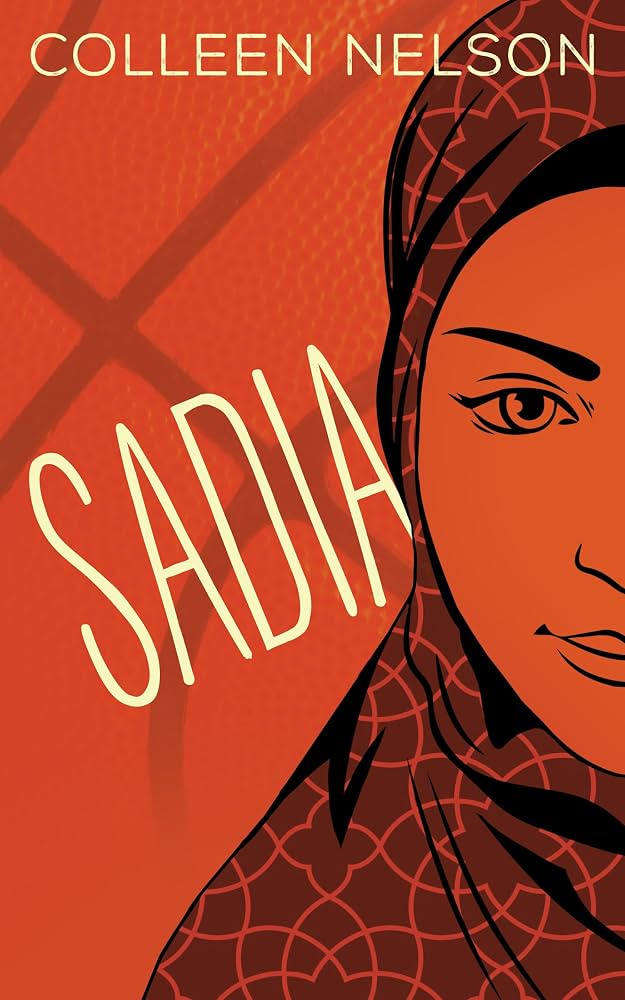
THE MUSICAL LIBRARIAN | CANADIAN BOOK REVIEW SadiaBasketball, friendship, faith, and one teenager’s determination to stand up for herself. Highly Recommended | Grades 7–10 |
| BEST FIT Grades 7–10 |
CLASSROOM Book Clubs |
THEMES Identity + Equity |
Best for: Canadian fiction, Muslim representation, religious accommodation, girls in sports, friendship, belonging, newcomer experiences, and student advocacy.
Every once in a while, I read a Canadian novel that reminds me how important it is for our classroom libraries to reflect the different identities, cultures, and experiences of the students sitting in front of us. Sadia by Colleen Nelson is one of those books.
At first glance, Sadia looks like a story about basketball. Its main character is a talented teenager who wants to succeed on the court, make her team, and pursue opportunities through the sport she loves. But the novel becomes about much more when a discriminatory rule threatens to prevent her from competing while wearing her hijab.
Suddenly, Sadia has to navigate questions about her faith, friendships, identity, and whether she should be expected to change something important about herself simply to participate in a sport.
What I appreciate about this novel is that it places these questions within an ordinary Canadian teenage experience. Sadia worries about friendships, fitting in, family expectations, and basketball. She’s a student-athlete who happens to be Muslim, and her identity influences her experiences without being the only thing that defines her.
I would recommend Sadia for Grades 7–10, particularly as an independent reading or literature-circle choice. It offers meaningful opportunities to examine equity, religious accommodation, identity, friendship, and what it means to advocate for yourself and others.
For teachers building inclusive classroom libraries, I’ve also created a free Equity-Inclusive Book Guide with additional reading ideas.
Spoilers and classroom discussion considerations ahead! Here’s what I’d want teachers to know before recommending Sadia to intermediate students.
What Is Sadia About?
Sadia Ahmadi is a fifteen-year-old Muslim teenager whose family immigrated from Syria to Winnipeg. She’s settling into life as a Canadian high school student while balancing friendships, family expectations, her faith, and her passion for basketball.
When tryouts for an elite basketball team are announced, Sadia sees an exciting opportunity to develop her skills and compete. She’s talented and determined, but a rule preventing players from wearing head coverings during an important tournament creates an unexpected obstacle.
Sadia is now facing a choice she never should have to make: remove her hijab to participate, or risk losing the opportunity to play the sport she loves.
Meanwhile, her friendship with Mariam is changing. Mariam has begun removing her hijab at school as she tries to navigate social pressures and fit in with other students. The girls have different feelings about their identities and personal choices, and those differences create tension between them.
Sadia also befriends Amira, a recently arrived Syrian refugee. Their growing relationship encourages Sadia to reflect on the differences between her own experiences as an immigrant and those of someone displaced by conflict.
As these storylines develop, Sadia must decide how to stand up for herself, respond to the opinions of people around her, and remain true to what matters to her.
Why Muslim Representation Matters in Middle School Fiction
One of the strongest reasons to include Sadia in a classroom library is the opportunity it provides for students to encounter a Muslim Canadian protagonist whose experiences are treated with care and complexity.
Too often, conversations about Muslim identity in classrooms focus almost exclusively on discrimination or cultural differences. While those are important issues to examine, students also deserve stories featuring Muslim characters with ordinary interests, ambitions, friendships, frustrations, and goals.
Sadia loves basketball. She cares about her friendships, has disagreements with people she loves, and worries about fitting in. Her faith is important to her, but it exists alongside the other parts of her identity.
I think that distinction matters. Students shouldn’t leave the novel thinking that being Muslim is only about facing prejudice. Instead, they can see Sadia as a whole person whose religious beliefs are one meaningful part of her life.
This would connect beautifully with The Proudest Blue, a picture book about a young girl’s pride in her sister’s hijab and the importance of family support. Although the books are intended for different age groups, both celebrate identity while examining how other people respond to visible expressions of faith.
The Hijab, Basketball, and the Difference Between Equality and Equity
The conflict surrounding Sadia’s hijab is probably the most useful part of the novel for classroom discussion. She has the talent and determination to compete, but an apparently universal rule creates a barrier that affects her differently from some of her teammates.
That makes the story an excellent opportunity to examine the difference between treating everyone exactly the same and ensuring everyone has a meaningful opportunity to participate.
Students could investigate the purpose of rules in sports and consider what makes a rule fair. Is a policy automatically equitable because it applies to all players? What happens when a rule unintentionally—or intentionally—excludes people because of their religious practices?
I would also encourage students to think about who should be involved in making decisions about religious accommodation. Sadia has her own beliefs and priorities, but many people around her have opinions about what she should do.
Ultimately, the question is bigger than basketball. It’s about whether students should be expected to compromise an important part of their identity to access opportunities available to their peers.
THE BIGGER QUESTION
Is a rule fair simply because everyone is expected to follow it?
Sadia’s experience encourages students to examine whether seemingly equal policies create unequal barriers and what meaningful inclusion in school sports should look like.
Friendship, Belonging, and Different Ways of Expressing Identity
The changing relationship between Sadia and Mariam is another reason I think this book would work well for middle school readers. As students grow older, friendships often become more complicated, particularly when people begin making different choices about their identities, priorities, and social groups.
Sadia and Mariam are both Muslim, but they don’t always agree about wearing the hijab or how they want to present themselves at school. Mariam’s decisions create tension between the friends, and Sadia has to navigate feelings of confusion, hurt, and frustration.
I think it’s important to approach this storyline without turning either character into a spokesperson for all Muslim girls. Religious identity and expression are personal, and people within the same community may make different choices.
For classroom discussions, I’d focus on how friendships change when people develop different priorities. Can you disagree with a friend’s choices while still respecting them? How does peer pressure influence decisions? What happens when someone feels that a friendship is changing?
These questions are relatable for Grade 7 and 8 students, even if their personal experiences differ from Sadia’s.
Immigration, Refugee Experiences, and Sadia’s Friendship With Amira
When Amira arrives at Sadia’s school, the novel introduces another important perspective. Although both girls have connections to Syria, their experiences of coming to Canada are different.
Sadia’s family immigrated before the Syrian civil war escalated, while Amira arrives as a refugee after experiencing displacement. Their friendship helps readers understand that sharing a country of origin doesn’t mean two people have the same experiences or circumstances.
I would want students to recognize the distinction between immigration and forced displacement rather than treating the terms immigrant and refugee as interchangeable.
This storyline offers a meaningful connection to Refugee by Alan Gratz, which follows young people navigating displacement during different historical periods. The books approach the subject in very different ways, but they can help students consider how circumstances shape people’s experiences of migration and belonging.
I’d also be careful not to assume that newcomer students in my class want to share their own stories. Students can investigate these themes through the characters and reliable background sources without being expected to disclose personal or family experiences.
Girls in Sports and the Importance of Representation
Basketball is an important part of Sadia’s identity. It gives her something she’s passionate about and an opportunity to demonstrate her abilities, build confidence, and work toward a goal.
But the story also highlights how barriers to participation can extend beyond athletic talent. Sadia’s ability isn’t the problem; the rules surrounding competition are.
For students involved in school sports, this creates an opportunity to examine who feels welcome on a team, how rules influence access, and what coaches and teammates can do when a policy creates an unfair barrier.
I think Sadia would pair particularly well with The Crossover by Kwame Alexander. Both feature young athletes whose experiences outside the game become just as important as what happens on the court.
For another sports-centred novel exploring friendship and identity, Booked offers a soccer storyline that may appeal to students who enjoy the sports element of Sadia’s story.
Student Voice, Advocacy, and Standing Up for What’s Right
One of the most valuable themes in Sadia is learning when and how to speak up. Sadia has to decide what matters to her and whether she’s willing to challenge a rule that affects her ability to participate in basketball.
Her situation gives students an opportunity to examine different approaches to advocacy. What should someone do when a rule is unfair? Who has the authority to change it? How can teammates, teachers, and community members support someone experiencing discrimination?
I’d also encourage students to distinguish between advocating with someone and speaking on their behalf without involving them. Sadia’s voice needs to remain central to decisions about her own experiences.
For another novel about young people recognizing injustice and the responsibility to respond, Linked by Gordon Korman would be a valuable comparison. Its focus on antisemitism and community responsibility is different, but both books examine what happens when students decide they can make a difference.
CLASSROOM ACTIVITY IDEA
The Inclusive Sports Policy Challenge
Have students work in small groups to examine a fictional school sports policy that creates a barrier for some participants. Their challenge is to recommend a more inclusive approach while considering safety, fairness, and meaningful participation.
1. Identify the barrier
Who is affected by the policy, and how does it limit participation?
2. Examine its purpose
What is the rule intended to accomplish? Is there evidence supporting that purpose?
3. Propose a solution
How could the policy meet legitimate needs without unnecessarily excluding students?
4. Defend the recommendation
Present an evidence-based proposal and respond to questions respectfully.
Teaching note: I wouldn’t ask students to debate whether a classmate should be allowed to practise their religion. Frame the inquiry around removing barriers and developing equitable policies, not judging someone’s identity or beliefs.
TEACHER PREPARATION
What Teachers Should Know Before Reading Sadia
Sadia is contemporary realistic fiction rather than a particularly violent or graphic young adult novel. The main content considerations relate to discrimination, identity, peer relationships, and refugee experiences.
- Islamophobia and discrimination: Sadia experiences barriers and assumptions connected to her Muslim identity and hijab.
- Religious identity: Characters have different perspectives on wearing the hijab and expressing their beliefs.
- Peer pressure: Friendships change as students try to fit in and navigate social expectations.
- Teen relationships: Crushes and developing romantic interests influence friendships.
- Refugee experiences: Amira’s story includes displacement from Syria and the challenges of adjusting to life in Canada.
- War and trauma: The Syrian conflict provides important background to Amira’s experiences.
- Gender and sports: The novel examines who gets to participate and how rules can create unequal barriers.
- Family expectations: Sadia navigates differing opinions from her family, friends, and teammates.
My recommendation: I would consider the novel for Grades 7–10, particularly in literature circles or a classroom library. I’d prepare to discuss Islamophobia and religious accommodation respectfully without expecting Muslim students to speak for their communities.
CLASSROOM RECOMMENDATIONS
How I’d Use Sadia
Grades 7–10 — Literature Circles
My preferred use. The novel offers meaningful opportunities to discuss identity, friendships, equity, discrimination, and student advocacy.
Grades 7–10 — Classroom Library
A strong contemporary Canadian novel for students interested in realistic fiction, basketball, friendship, and stories about standing up for personal beliefs.
Grades 8–10 — Whole-Class Study
Worth considering with intentional preparation around religious identity, inclusion, newcomer experiences, and discussions of equity.
Is Sadia Appropriate for Grades 7–10?
I think Grade 7 is a reasonable starting point for many readers. Sadia is older than most Grade 7 students, but her experiences with friendship, school, belonging, and standing up for herself are still relatable. I would especially consider it for students who enjoy contemporary realistic fiction and are ready for more developed social themes.
For Grade 8, the novel offers excellent opportunities for discussions about equity, student voice, and the relationship between individual beliefs and institutional rules. I could see it fitting naturally into a literature-circle unit featuring Canadian authors and diverse protagonists.
Grades 9–10 students could examine the conflict in greater depth through critical literacy, human rights, and how institutions respond to requests for accommodation.
For me, the most important consideration isn’t the reading difficulty or mature content. It’s being prepared to support discussions about Muslim identity, discrimination, refugee experiences, and religious freedom without simplifying them into stereotypes.
16 Discussion Questions for Sadia
I’d focus on Sadia’s choices, the impact of social expectations, and how students can recognize and respond to barriers. Select a topic below to expand the questions.
Identity and Religious Expression
- Why is wearing the hijab important to Sadia?
- How does Sadia’s identity influence her experiences at school?
- How do Sadia and Mariam express their identities differently?
- What can we learn from characters who make different personal choices?
Basketball, Equity, and Advocacy
- Why is basketball so important to Sadia?
- How does the tournament rule create an unfair barrier?
- What is the difference between an equal rule and an equitable outcome?
- How can teammates and adults support someone challenging an unfair policy?
Friendship and Belonging
- Why does Sadia’s relationship with Mariam change?
- Can friends disagree about important beliefs and still respect one another?
- How does peer pressure influence characters’ decisions?
- How does Sadia’s friendship with Amira affect her understanding of others?
Newcomer Experiences and Student Voice
- How are Sadia’s and Amira’s experiences of coming to Canada different?
- Why is it important not to assume all newcomers have the same experiences?
- What does standing up for yourself look like in the novel?
- How does Sadia grow in confidence and independence throughout the story?
Ontario Curriculum Connections
Sadia offers meaningful opportunities for Ontario Language instruction, particularly critical literacy, character development, analyzing perspectives, and creating evidence-based arguments. It could also support connections to equity and inclusion in school athletics.
Language — Character Development and Perspective
Students could examine how Sadia, Mariam, and Amira respond to the expectations around them. They could compare the characters’ choices, identify motivations, and explain how different experiences shape their understanding of identity and belonging.
Language — Critical Literacy and Equity
The basketball rule offers a strong opportunity to examine how institutional policies affect individuals differently. Students could identify whose perspectives are represented, who has decision-making power, and how language can influence perceptions of fairness.
Language — Argument and Persuasive Writing
Students could write a reasoned recommendation to a fictional sports organization, using evidence to explain how a policy might better support inclusion while addressing legitimate safety considerations.
Media Literacy — Representation and Stereotypes
Students could examine examples of how athletes and newcomers are represented in age-appropriate media. They could compare those representations with the experiences depicted in the novel while avoiding assumptions about entire cultural or religious groups.
Health and Physical Education — Inclusion in Sport
The novel provides a useful fictional starting point for conversations about participation, respectful team environments, equity, and the role of sports organizations in reducing unnecessary barriers. I would connect any real-world policy research to current, verified rules rather than assuming the fictional tournament policy still reflects sports regulations.
Teaching Resources for Sadia
If I were introducing Sadia through literature circles, I’d combine the novel with reliable background resources and give students room to investigate the characters’ choices independently.
Free Equity-Inclusive Book Guide
I’ve created a downloadable book guide to help teachers discover additional stories featuring diverse identities and experiences.
Picture Book Response Page
Although designed for shorter texts, my printable response page could also support a companion picture-book study about identity and belonging.
Colleen Nelson — Author Website
Explore additional novels and information about Canadian author Colleen Nelson.
Canadian School Libraries — Refugees and Immigrants
This Canadian School Libraries collection includes discussion of Sadia and other books addressing immigration and refugee experiences.
More Books About Identity, Belonging, and Finding Your Voice
For younger readers, The Proudest Blue is a wonderful picture book exploring pride in Muslim identity and the importance of family support.
I would also recommend Refugee for students interested in learning more about displacement and the difficult decisions people make when seeking safety. It’s more intense than Sadia, so I’d consider the individual reader carefully.
For sports fans, The Crossover and Booked explore friendship, family, and identity through basketball and soccer.
For another story about young people responding to prejudice and taking responsibility for change, Linked would make a strong companion for middle school readers.
Final Thoughts
Sadia by Colleen Nelson is the kind of Canadian young adult novel I want represented in an intermediate classroom library. It offers a compelling story about a teenager balancing friendship, family expectations, faith, and her love of basketball while learning to advocate for herself.
What stands out to me is the way the story connects personal choices with larger questions about equity and belonging. Sadia’s struggle isn’t simply about whether she’ll be allowed to compete. It’s about why she should have to choose between a meaningful part of her identity and an opportunity available to her peers.
I also appreciate that the novel explores differences within friendships and newcomer experiences. Sadia, Mariam, and Amira aren’t interchangeable characters, and their different perspectives create opportunities for students to consider how identity and experience shape the choices people make.
For Grades 7–10, I think the novel offers excellent potential for literature circles, classroom libraries, and thoughtful discussions about inclusion and student voice. It’s accessible enough for many intermediate readers while offering substantial ideas to explore.
I would absolutely recommend Sadia to teachers building an inclusive middle school library. It’s a thoughtful, hopeful Canadian story about finding the confidence to stand up for what matters.
MY CLASSROOM RECOMMENDATION
Highly Recommended
Grades 7–10
A Canadian young adult novel about basketball, Muslim identity, friendship, equity, and the courage to advocate for yourself.
Until next time,
Margaret